Process
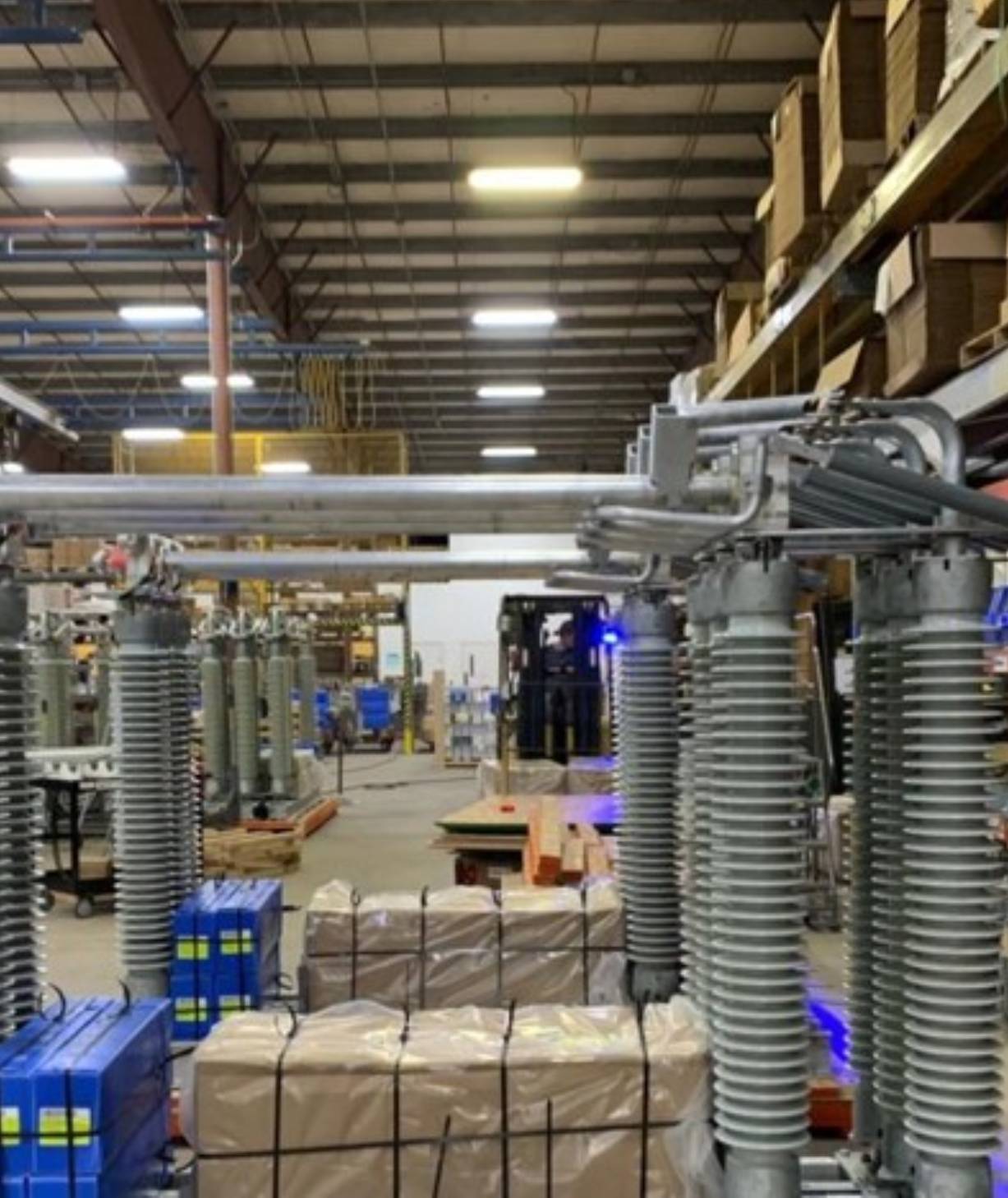
The manufacturing process at Insulators & Electricals Company (IEC), a unit of Hindusthan Insulators & Industries Ltd., is a comprehensive and meticulous procedure aimed at producing high-quality porcelain insulators for various applications in electrical power plants, substations, and transmission and distribution systems. IEC’s manufacturing facility, located in Mandideep, near Bhopal, spans over 204,000 square meters and boasts an annual production capacity of approximately 18,000 metric tons.
Manufacturing Process at IEC
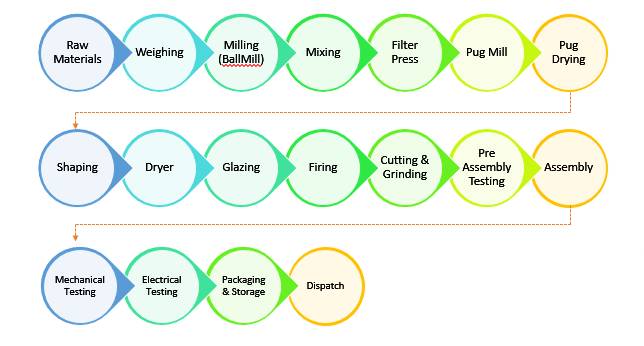
IEC employs a traditional yet refined wet process for the production of porcelain insulators. This process involves several key stages:
Raw Material Preparation
The process begins with the selection and preparation of raw materials, including clay, feldspar, and quartz. These materials are carefully blended to achieve the desired chemical composition.
Mixing and Pugging
The prepared raw materials are mixed with water to form a homogeneous slurry. This mixture is then processed through a pug mill to remove air bubbles and ensure uniform consistency.
Shaping
The homogeneous mixture is shaped into the desired insulator forms using various molding techniques, including slip casting and extrusion. This step defines the basic geometry of the insulators
Drying
The molded insulators are carefully dried to remove excess moisture. This is a critical step to prevent cracking during the subsequent firing process.
Glazing
After drying, the insulators are coated with a glaze to enhance their electrical insulation properties and provide a smooth surface. This glaze also contributes to the insulator's resistance to environmental factors.
Firing
The glazed insulators are then fired in high-temperature kilns. This step vitrifies the porcelain, imparting the necessary mechanical strength and electrical insulating properties. The firing process is meticulously controlled to ensure uniformity and quality.
Assembly
Post-firing, metal cutting, fittings and flanges are cemented onto the porcelain body using specialized cement mixtures. This assembly is performed in precision jigs to maintain alignment and ensure structural integrity.
Testing and Quality Control
Each insulator undergoes rigorous testing, including mechanical load testing, high-voltage testing, and visual inspections, to ensure compliance with international standards such as IS, IEC, and ANSI.
Packing and Dispatch
Finally, the insulators are carefully packed to prevent damage during transportation and are dispatched to customers worldwide.
IEC’s commitment to quality is reflected in its adherence to ISO 9001:2015, ISO 14001:2015, and ISO 45001:2018 certifications, ensuring that each product meets the highest standards of performance and safety.
Summary
The manufacturing process at IEC is a testament to the company's dedication to producing reliable and high-quality porcelain insulators. Through meticulous attention to detail and adherence to stringent quality control measures, IEC continues to serve the electrical power industry both domestically and internationally.
Get In Touch